English
 Bahasa
 Hindi
Hindi
 Arabic
 Spanish






In the lubricants industry, product quality is often associated with formulation and raw materials. However, one critical factor that is frequently overlooked is the quality control system throughout the production process.
From real-world experience working with grease manufacturers, it becomes clear that even when using the same formula, inconsistent quality control can lead to noticeable differences between production batches. This is especially important in industrial applications where performance reliability is non-negotiable.
That is why professional lubricating grease manufacturers invest in a dedicated Quality Control (QC) department. This function ensures that every product meets technical standards before reaching the market.
For businesses sourcing lubricants or developing OEM (Original Equipment Manufacturer) grease products, understanding the QC system is essential when evaluating a factory’s true capability.
What is a Quality Control Department in Grease Manufacturing?
In industrial production, the QC department acts as a technical checkpoint that ensures products meet defined specifications.
In lubricating grease manufacturing, QC typically covers three key stages:
Raw Material Inspection
Before production begins, all key inputs such as base oil, thickeners, and additives are tested against technical standards.
This step minimizes the risk of inconsistent raw materials, which could compromise the final product quality.
In-Process Control
During the cooking and blending stages, QC teams conduct intermediate testing to monitor parameters such as product uniformity, grease consistency, and reaction temperature.
These checks allow engineers to detect deviations early and adjust the process accordingly.
Finished Product Testing
Before packaging and delivery, each batch must undergo final testing to confirm it meets declared specifications.
This ensures that customers receive a product that performs as expected in real applications.

Lubricating grease quality testing laboratory
Key Technical Parameters in Grease Quality Testin
Lubricating grease is a highly technical product, so its quality cannot be judged by appearance alone. QC laboratories rely on standardized tests to evaluate performance.
Grease Consistency (NLGI Grade)
Consistency is one of the most important properties. It determines whether the grease is soft or firm and directly affects lubrication efficiency.
Common grades include NLGI 0, 1, 2, and 3, with NLGI 2 being the most widely used in industrial applications.
Thermal Resistance
Many machines operate under high temperatures, requiring grease to maintain stability. QC teams evaluate this through tests like dropping point and thermal stability.
These results indicate whether the product is suitable for specific operating conditions.
Load-Carrying Capacity and Wear Protection
In heavy-duty systems such as industrial bearings or gear transmissions, grease must form a durable protective film.
QC testing helps assess the grease’s ability to withstand pressure and reduce wear under real working conditions.
Water Resistance and Oxidation Stability
In humid or water-exposed environments, grease must resist washout and maintain its structure.
Oxidation stability testing also helps predict how long the product can perform effectively over time.

Measuring grease consistency in quality testing
Why Quality Control is Critical in Grease Production
From an industry perspective, QC is not just a technical requirement. It directly impacts product reliability and brand reputation.
Ensuring Batch-to-Batch Consistency
Consistency is one of the most important expectations in industrial products. Customers rely on receiving the same performance across multiple orders.
Without strict QC, variations between batches can occur, leading to operational risks.
Supporting Product Development and OEM Projects
For businesses developing private-label grease products, QC plays a vital role in formulation testing and validation.
It helps ensure that new products meet both technical specifications and real-world performance requirements.
Building Market Trust
In the lubricants market, trust is built on long-term consistency. A strong QC system allows manufacturers to control production risks, maintain quality standards, and build confidence with customers and partners.

Technician testing grease samples in laboratory
A Practical Perspective from Vietnam’s Grease Manufacturing Industry
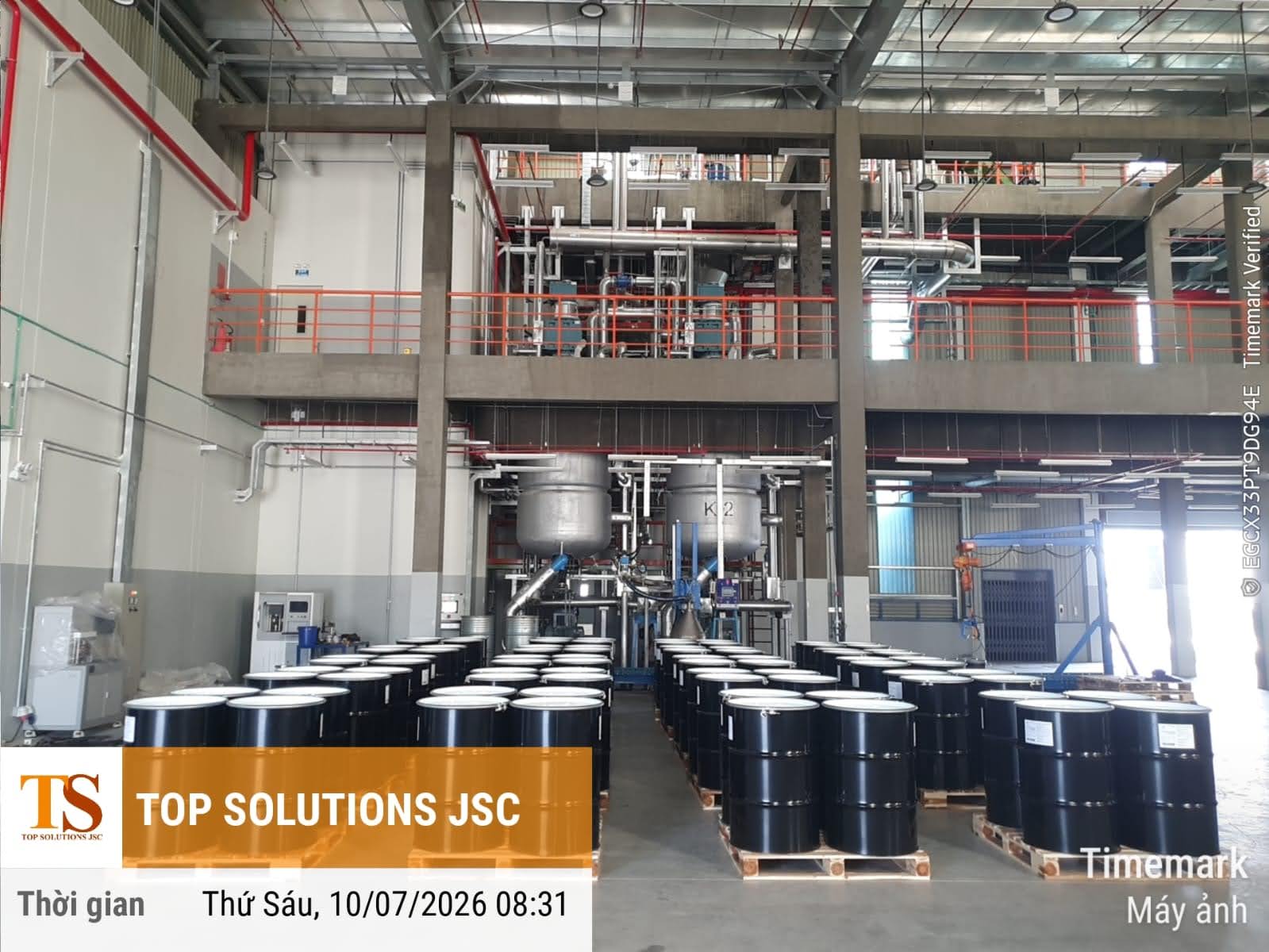
At nhamaymo.vn, the quality control system is designed to oversee the entire production process, from raw material input to finished product output.
All products undergo technical testing to ensure compliance with declared standards before shipment. In addition, the QC system supports R&D activities, including testing new formulations and developing OEM grease solutions for partners.
Conclusion
In lubricating grease manufacturing, formulation is only part of the story. Without a robust quality control system, even the best formula cannot guarantee consistent performance.
A well-structured QC department helps manufacturers control raw materials, monitor production processes, and ensure stable product quality.
For businesses entering the lubricants market or developing their own brand, evaluating a manufacturer’s quality control capability is a key step toward long-term success.