Businesses entering the lubricating grease market often begin as distributors. They can sell established products without investing in a manufacturing plant or creating a complete product range from the ground up.
As the customer base grows, a second option becomes relevant: developing grease under the business's own brand through an OEM or private-label manufacturing partner. The right model depends on market access, capital, technical requirements and growth goals.
How the grease distributor model works
A distributor sells products manufactured and branded by another company. This arrangement can provide established specifications, packaging and sales materials, allowing a business to focus on customer acquisition, logistics and service.
It can be a practical choice for a new market entrant because it generally requires less product-development work and may allow a quicker launch. The trade-off is dependence on the brand owner's pricing, portfolio and channel policies.
- Lower product-development burden
- Access to an existing product range
- Potential benefit from established brand recognition
- Less control over pricing, packaging and product changes
- Limited opportunity to build equity in your own product brand
How OEM private-label grease manufacturing works
In an OEM arrangement, a manufacturing partner produces grease to agreed specifications for sale under your brand. Depending on the program, this may use an existing qualified formulation or a customized one.
Responsibilities vary by agreement. The manufacturing partner may support formulation selection, production, testing and documentation, while the brand owner typically leads market positioning, forecasting, sales, distribution and customer relationships.
Private-label manufacturing can eliminate the need to build and operate a grease plant, but it does not eliminate the work of launching a product. Brand owners still need to plan demand, packaging, inventory, claims and applicable market requirements.
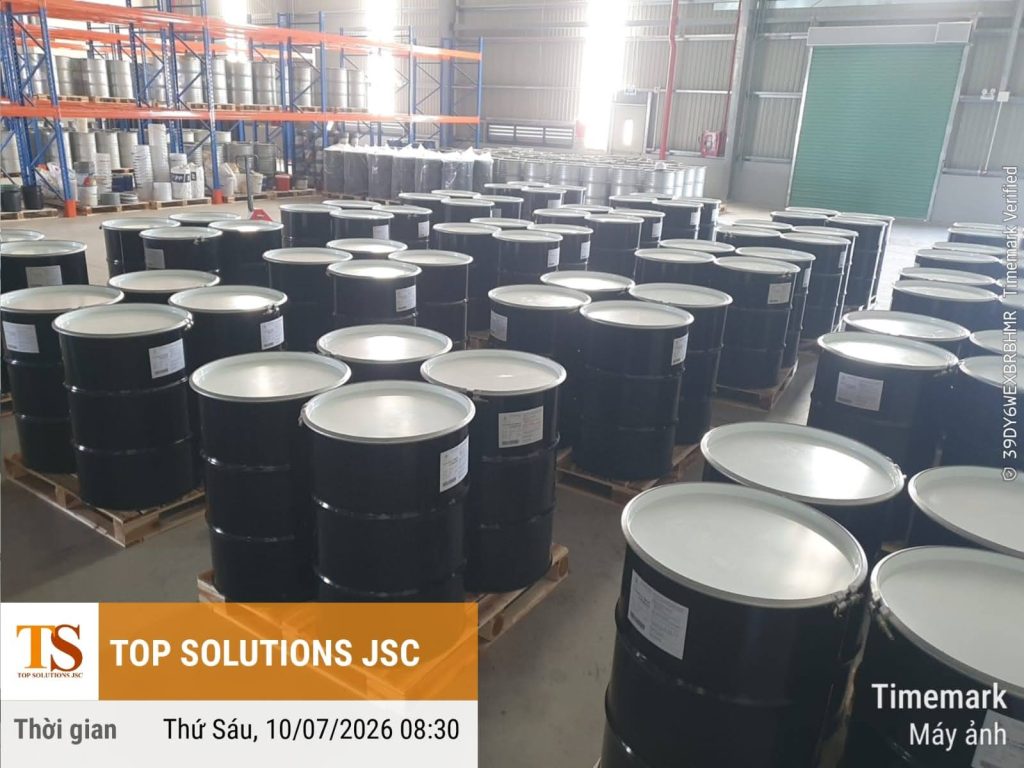
Distributor vs. private label: side-by-side comparison
Why businesses consider building their own grease brand
An own-brand range can give a company more control over customer positioning, pack sizes, channel strategy and product development. Marketing investment supports the company's own identity instead of only strengthening a supplier's brand.
OEM manufacturing may also allow products to be matched more closely to defined industrial applications. Sound product selection still starts with technical requirements such as base-oil viscosity, NLGI grade, thickener type, operating temperature, load, speed and environmental exposure. Our guides to lubricating grease fundamentals and grease dropping point explain why one headline property is never enough.
Costs and risks that private-label plans must include
Private label is not automatically the more profitable model. A realistic business case should include formulation or qualification work, samples and testing, label and packaging development, minimum order quantities, inventory holding, working capital, sales support and regulatory or documentation responsibilities.
Forecast error matters. Ordering too little can affect availability and unit economics; ordering too much can tie up cash or leave obsolete packaging. A staged launch with a focused product range is often more manageable than attempting to cover every application immediately.
When is a business ready for OEM manufacturing?
A company is usually better prepared when it can answer the following questions:
- Which customers and applications will the product serve?
- What annual volume can be forecast with reasonable confidence?
- Which technical specifications or reference products apply?
- Which pack sizes, labels and destination markets are required?
- Is sufficient budget available for production, packaging and inventory?
- Who will own sales, technical support and compliance decisions?
If these answers are still unclear, continuing as a distributor while validating demand may be the better decision. If the market, volume and positioning are established, private label can become a logical next step.
Planning an OEM grease project
A structured program normally progresses from requirement definition to formulation selection, sampling, testing, customer approval, packaging preparation and commercial manufacture. Quality criteria should be agreed before production so both parties have a clear basis for acceptance and batch control.
Read more about the OEM grease quality-control process and the path to building a private-label grease brand.
Frequently asked questions
What is the difference between grease distribution and private-label manufacturing?
A distributor resells another company's established products. In a private-label arrangement, a manufacturing partner produces grease to agreed specifications for sale under the customer's own brand.
How much volume is needed to launch a private-label grease?
Minimum volume varies with formulation, packaging, testing and production requirements. Share estimated annual volume and pack sizes so feasibility can be assessed.
Can an OEM customize grease formulation and packaging?
Depending on the program, an OEM may offer an existing qualified formulation or develop adjustments for agreed applications and specifications, together with suitable packaging and labels.
What information is needed for an OEM grease quotation?
Provide the target application, operating conditions, required specifications, packaging sizes, destination market and estimated annual volume.
Is private-label grease more profitable than distribution?
It can create more margin and brand-value potential, but results depend on volume, pricing, setup costs, inventory, compliance duties and market execution.
Conclusion
Distribution and private label suit different stages of growth. Distribution provides a practical route to market with less setup work. Private label can create stronger control, differentiation and brand value when supported by sufficient demand, capital and operational planning.