English
 Bahasa
 Hindi
Hindi
 Arabic
 Spanish





In many manufacturing facilities, lubricating grease is rarely the first thing that comes to mind when discussing operational efficiency. Most companies focus on machinery, production lines, output capacity, or raw material costs. However, in real industrial environments, lubrication plays a much more important role than many businesses initially realize.
From experience working with manufacturing companies across different industries, it is common to see lubrication become a concern only after operational problems begin to appear. These issues may include premature bearing failures, abnormal equipment temperatures, or unexpected increases in maintenance costs. At that stage, reviewing the lubrication strategy becomes an essential step in restoring operational stability.
As the grease market continues to grow alongside industrial expansion, understanding the role of industrial lubricating grease in modern production systems is becoming increasingly important. For many manufacturers, lubrication is not simply a maintenance detail but a fundamental part of equipment reliability and long-term cost control.
Understanding Industrial Lubricating Grease
Industrial lubricating grease is a semi-solid lubricant composed of three primary components:
- Base oil
- Thickener
- Additive package
The base oil performs the main lubrication function by reducing friction between moving metal surfaces. The thickener holds the oil within a semi-solid structure so the grease can stay in place. Additives enhance performance by improving properties such as wear protection, oxidation resistance, load capacity, and water resistance.
Unlike liquid lubricating oil, grease is designed to remain in specific lubrication points for longer periods. This makes it particularly suitable for components where continuous oil circulation is difficult.
Common lubricating grease applications include:
- Bearings
- Mechanical joints
- Rotating shafts
- Chassis and heavy equipment systems
- Machinery operating in dusty or humid environments
In many modern production lines, these components operate continuously for long periods. When lubrication becomes insufficient or unsuitable, friction increases quickly, generating heat and accelerating component wear.
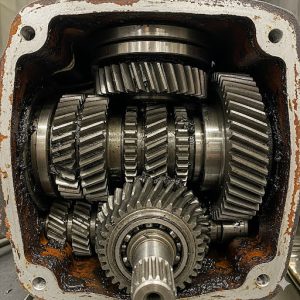
Industrial bearings or machinery lubrication system
An important point is that industrial lubricating grease is not a universal product. Different machines, operating environments, and workloads require different lubrication properties.
Why Lubricating Grease Matters in Industrial Operations
Although grease represents a small portion of operational expenses, its impact on equipment performance can be significant.
In practice, lubrication directly affects three key areas of industrial operations: equipment lifespan, maintenance costs, and operational stability.
Equipment Protection and Lifespan
Friction between metal surfaces is one of the main causes of mechanical wear. When the correct grease is applied, a protective film forms between surfaces, reducing direct contact and minimizing wear.
From real-world factory experience, failures such as seized bearings, damaged shafts, or excessive vibration are frequently linked to lubrication issues.
Selecting appropriate industrial lubrication solutions helps maintain stable machine performance and significantly extends component lifespan.
Impact on Operational Costs
Grease itself is relatively inexpensive compared with the cost of machinery or production downtime. However, choosing the wrong lubricant can create hidden operational expenses.
These costs may include:
- unexpected equipment shutdowns
- increased maintenance frequency
- premature component replacement
In many cases, choosing the right grease early in the process leads to more stable operations and lower long-term costs.
Maintenance Planning and Reliability
A consistent lubrication strategy helps manufacturers maintain predictable maintenance schedules. This is especially important in industries where machines operate continuously, such as:
- textile manufacturing
- paper production
- wood processing
- construction materials production
A stable lubrication system reduces the risk of unexpected failures and helps maintenance teams plan preventive maintenance more effectively.

Maintenance technician inspecting lubrication points in a factory
Key Factors When Selecting Industrial Lubricating Grease
When companies begin evaluating lubrication options, the most common question is: Which grease should we use?
In reality, selecting lubricating grease requires consideration of several technical and operational factors.
NLGI Grade and Grease Consistency
The NLGI (National Lubricating Grease Institute) grade measures grease consistency. In industrial applications, the most common grades range from NLGI 1 to NLGI 3.
- Lower NLGI grades: softer grease with easier pumpability
- Higher NLGI grades: thicker grease with stronger adhesion
The appropriate grade depends on equipment design, rotational speed, and lubrication system requirements.
Temperature Resistance
Some industrial environments expose machinery to high operating temperatures. In these cases, grease must maintain its structural stability and lubricating properties over extended periods.
Heat resistance is influenced by factors such as:
- base oil type
- thickener chemistry
- oxidation-resistant additives
Load-Carrying Performance
Heavy industrial equipment often operates under high mechanical loads. Grease used in these conditions must protect metal surfaces under pressure.
Many industrial greases include extreme pressure (EP) additives, which help prevent metal-to-metal contact under high loads.

Diagram showing grease composition: base oil, thickener, additives
The Growing Role of Grease Manufacturers in Vietnam
As manufacturing activity continues to expand, the Vietnam grease market has evolved significantly in recent years.
Demand for reliable lubrication products is increasing across industries such as:
- manufacturing and mechanical engineering
- logistics and transportation
- wood processing
- industrial production lines
At the same time, grease manufacturers in Vietnam are playing an increasingly important role in supporting industrial supply chains.
Beyond producing lubricants, many manufacturers are involved in:
- product development for specific applications
- technical consultation for industrial customers
- customized lubrication solutions for specialized equipment
This development reflects a broader trend in industrial lubrication: businesses are moving away from one-size-fits-all products and toward more tailored solutions designed for their specific operational needs.
Conclusion
Within the industrial production chain, lubricating grease may appear to be a minor component, but it plays a critical role in maintaining equipment stability and operational efficiency.
Understanding how industrial lubricating grease works, from its basic structure to its real-world applications, helps businesses make more informed decisions about lubrication strategies. The right lubrication approach can reduce friction, extend equipment life, and improve the reliability of production systems.
As industrial sectors continue to grow, access to reliable information about industrial lubrication solutions becomes increasingly valuable. Platforms such as oemgrease.com aim to provide industry-focused insights on lubricating grease, manufacturing practices, and practical applications within modern production environments.
These insights help businesses better understand lubrication challenges and evaluate suitable solutions for their production systems.